Back to Journals
Home
Next Wonderous
Story
Rainy Days and Sun Rays
Richard M. Ankers
Illustrated by Warren Musak
They resembled upturned umbrellas. It was as though a tempest had whipped a forest of the things inside out, and then blown their owners away, only to abate just as quickly and the giant umbrellas float back down from the sky and implant themselves deep in the earth. I say giant because the trees were just this. About twice the size of ancient redwoods and broader than a bus, they towered over the otherwise barren landscape like gods of the tundra. “They’re an incredible achievement,” I said, because some things just are.
“They are the culmination of this world’s mightiest minds.” She sighed as though having just run a marathon.
“Truly incredible,” I repeated, though more to myself. “The ministry has done us proud.”
The scientist smiled a sweet smile, but the strain of her work, their work, had taken its toll. Once lush emerald eyes, green as the grass that once covered the landscape, if I remembered correctly from our school days, looked closer to grey. There were even a few streaks of the stuff running through her pinned auburn locks. We’d never been friends, just faces across an overheated classroom, but it still shocked.
“Two hundred years in the making,” she continued. “Two hundred years of searching for the right combinations. Of praying they’d gel. Of not getting too carried away.” She whistled a little ditty. “Now, we’re ready to share their seeds with the world.”
“You mean, sow?”
She eyed me as if seeing if I joked, which I did, but apparently not very well.
“Hm,” was all she managed.
I scratched at my chin and considered my next words with care. They were unforthcoming.
As if sensing my struggles, she gave a nod towards my half-open bag.
“Oh, of course. It is my job, after all.” My arm plunged inside like a diver from a cliff, rummaged and scrambled around, and withdrew a pencil.
“I’d suggest something to write on, too.”
“Good point.” In it dove again, and out popped the tattered old notebook I’d found in a rubbish heap. I’d used and erased it so many times it was barely paper at all. The pencil I held seemed delighted, though, actively bobbing up and down between my thumb and forefinger, searching it out. My brain, however, appeared unwilling to help, and the pencil refused to write. I had questions. Important questions. “You mean for their wood, don’t you?”
She tinkled a crystal laugh. “No.” A tiny glimpse of the girl she once was swept across her features.
“Then, they’re for hollowing out and being used for accommodation? Hell, the planet needs homes.” I shook my head. This was an ongoing concern and had been for far too long. “I sure wouldn’t mind living in a treetop penthouse.” I laughed so falsely I wanted to roll my own eyes, never mind see the scientist roll hers.
“No.”
“Then, what?” I was perplexed, to say the least.
“Wait.”
“For?”
“Just wait,” she heaved, as though I was a troublesome infant. “You’ll see soon enough.”
So, I did.
We drank a cup of tea as the storm clouds gathered. Every day at the same time, regular as clockwork. When the heat of the land grew too much, superheating the air, nature always responded. It had since long before the war. Long before mankind scorched the skies and most of what lay beneath them. Back when the clouds roamed free and released their life-giving raindrops at will. The war that almost ended everything, especially water, that most precious of all commodities, had killed the skies. It had all happened long before my time, of course, but the scars remained. The Earth was changed, and so were we. I supposed it was only natural that nature would eventually overcompensate. Unless it was just trying to drown us where burning ourselves had failed?
“Shall we head inside?” I hoped she’d say yes. I hated getting wet.
“Not today. You’ll want to see this.”
Torrential rains, for there were no other kind now, would come and wash everything from their path. This was the way of things. No dam could contain them. No river could bear the weight of their twice-daily waters. Only the ever-rising ocean took their pounding with gentle good humour. The populace, namely us, lived atop whatever mountain ranges remained, wherever there was enough height to avoid the imminent disaster to come. Who’d have ever thought it would be an excess of water that would get us, not the dire shortages the twentieth-century scientists predicted, and then facilitated?
“Please?” I asked, edging away.
She reluctantly capitulated. “Just under the roof.”
It didn’t look the strongest construction, but I stepped back into the shelter, as did she.
The soon-to-be storm followed us inside.
A grumble. A rumble. One dramatic flash of indigo light. The first few drops glistened and shone like falling diamonds. Then everything darkened to pitch.
What birds were in the sky shot back towards whatever shelter they used to survive. Maybe it was holes in the cliffs, subterranean caves, or even the strengthened, overhanging roofs of humanity’s domiciles, but whatever, they sure were in a rush. A hundred small black darts disappeared in the glaring light of a second lightning flash.
The giant upside down trees stood tall and proud against the storm. Their enormous shadows diminished as the world about them turned to night, stretching back into their parental bulk as though made of elastic, leaving only the monolithic, black lumps of wood in their place. The effect of multiple umbrellas was even more pronounced. I shivered as the temperature dropped about ten degrees a second.
Her eyes twinkled. A well-manicured hand reached out and grabbed my arm. “Watch.” She trembled with excitement.
When the rain fell, I knew why.
Her smile broadened as the realization set in. As the rains fell in their usual cataclysmic proportions, nature, or, at least, a form of it, performed her new job.
The deluge filled the landscape, turning dust and drought into an instant ocean. One I knew from experience would cascade away in such tempestuous torrents as to even level mountains. Churning waves that any tempestuous ocean would’ve envied crashed against the planet. I cringed, as white froth made false snowflakes of the air. What chance did the trees have against such forces? But I needn’t have worried. The giants stood tall and proud, their arms wide and inviting. And there it was, their purpose: They gathered.
The scientist whose name I still couldn’t remember handed me a pair of binoculars. “Look closer.” She aimed a finger high, high, higher still.
I cast her a dubious glance, but offered them up to my eyes. It wasn’t as I thought, though. They’d gone much further than just containing the waters.
What I had taken for winding trails of engorged ivy were actually pipes that filled with the fast-flowing water spilling from above. The trees harvested the stuff in their upturned bulk by the billions of cubic litres and passed it on to somewhere else. These upside-down genetic marvels were reservoirs. Aerial reservoirs on high, it’s true, but reservoirs nonetheless. They gathered what man-made devices couldn’t possibly hope to cope with. What’s more, thanks to the amassed scientists’ ingenuity, the water could now be used before it steamed itself away.
She watched my reaction, and the little girl who’d wanted to be a scientist to better herself, and possibly, just possibly save the world, returned.
“It’s a start,” she said.
“It’s a chance,” said I, as my pencil began to scribble. I watched as the pipes ran away under the ground bearing their burdens, like rivulets of potential life. There was only one question left now. “What can we use it for?”
“Everything!”
She stepped further into the shelter. Her eyes never left the sky. She reached behind her, fingers fumbling, caught hold of the curtain I presumed covered a window, and drew it aside. How wrong I was.
The building extended out behind its own small frontage like our own legs do from our hips. But these legs were made of glass. Strengthened glass, I hoped. They allowed the sunlight in, but I could see by the blinds that adorned them, could be controlled. Beneath them were flowers in long, thin trenches of soil. Soil fed by pipes of water controlled by thousands of valves. There were so many colours they dazzled. It was as if the scientists had collected all the rainbows in all the world and laid them out flat for humanity to cherish. I gasped in disbelief. I’d only ever seen flowers in picture books. Seeing them now, as I did, made their former absence all the more heartbreaking.
“It’s Jill, isn’t it?”
“I was wondering if you’d ever remember, Robert.” She put particular emphasis on my name, as though to prove she’d never forgotten mine.
“You know how it is when most of the time you’re just trying to forget.”
“I do. Although my colleagues and I have had a responsibility not to.”
I puffed out my cheeks and allowed my eyes to rove. “So much colour. It’s all so beautiful. The ministry has done a truly wonderful job.”
“Not much of a ministry anymore. Just a few disparate do-gooders wearing white coats, really.” She sighed the most genuine sigh I’d ever heard. “Anyway, wait until you see the vegetable gardens. They really are a marvel. Cucumbers, tomatoes, even orchards full of apples. We’ve got them all.”
I began to nod and somehow just couldn’t stop.
“I can see you understand,” she said, chuckling.
I smiled as best I could.
“Besides, you’re the only one I know who still writes.” She winked, the creases at the sides of her eyes giving far too much away. “It wouldn’t have done just to tell you. You had to see it for yourself. That’s why we wanted a writer, a journalist, a man who the others would read and believe. A person with far more power than a scientist. One to give an announcement the world would actually listen to. Only a writer could describe the pure, undiluted joy of what may come. Only a writer could extol the endless possibilities. The hope of a future not as lost as we all imagined.”
Odd? I thought, considering. Because just at that moment, in that one instant in time, I hadn’t a word to share. In a world where the headlines were printed over the decaying, salvaged newsprint of the past, as if to prove it’d all actually happened, words on paper just didn’t seem enough. After all, how does one translate centuries of tears into text? No matter how many of them are captured in upside-down trees.
The End
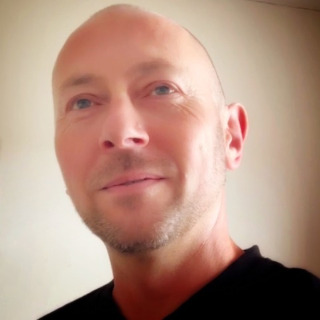
Richard M. Ankers is the English author of The Eternals Series and Britannia Unleashed. Richard has featured in Daily Science Fiction, Love Letters To Poe, Starspun Lit, and feels privileged to have appeared in many more. Richard lives to write.

Like what we do? Buy us a Cup of Coffee!


