
Staff Written Editorial Autumn 2026
Volume 14 Number 2
Biophilia: from ‘Cultural Services’
to Something We Can’t Live Without
Meghan F. Davis, DVM MPH PhD
Priya Sridhar, MBA
Scientific Roots
Humanity is a walking contradiction. We love sunshine and bright green fields but also level a lot of those fields for skyscrapers and cities. Though for centuries we saw whales as monsters, hearing their songs rendered to tape inspired people to take up the call to protect them. It is meaningful that we need laws and treaties and people to campaign to protect vulnerable ecologies against land development.
The UN’s Millennium Ecosystem Assessment evaluated climate change’s impact and how we humans thrive socially and practically from protecting such areas. This initiative (2001-2005), in its goal to evaluate the impacts of global climate change and ecosystem impacts on human health, described key ‘ecosystem services’ that nature provides to humans (and the planet). Among these are ‘cultural services,’ which includes art inspired by nature, or the importance of place or ecosystem to cultures worldwide. Unlike the other services that provide, regulate or support humanity, ‘cultural services’ are less material, more intrinsic. They tap into the core of the connections between humans and their environments.
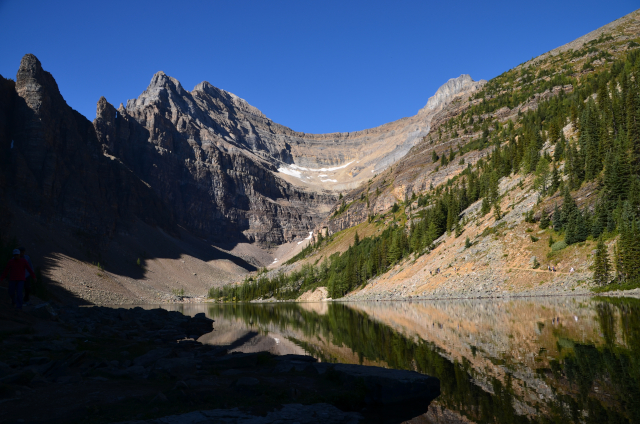
A ‘cultural service’ might manifest in different ways—for example, the generational value of heirloom crops to indigenous community food sovereignty, with the additional service that these species can thrive in the ecosystems suited to them where ‘conventional’ crops might fail. They also might be connected to a specific place—unique geologies and ecologies where people come to worship or convene. These are places that laws and treaties, such as the international Convention on Biodiversity, are intended to preserve.
You may be feeling scared as leaders repeal those laws, unconcerned for the devastation they leave in their wake. Being scared is natural. But we have to keep fighting for our planet. Every day we have a victory, like the UK converting coal fields to water-source heat pumps to keep houses at safe temperatures in the winter, or beavers restoring water to drought-ridden flatlands. We have to fight, but we also need to celebrate our wins.
Love and Art
Why do humans protect nature? Because the flora, fauna, and organisms that make up different ecosystems keep us alive as well. Trees produce oxygen that allows us to breathe, and different plants have provided herbal remedies. Stable microbial ecosystems, supplemented judiciously with antibiotics originally derived from natural sources, hold the line against illness and infections. And animals? In addition to providing sustenance to allow humans to thrive, they also pollinate the trees and plants that feed human populations. From a buzzing bee to a happy horse, they spread the seeds.

Biophilia literally means “love of nature” and refers to the scientific expansion of this love. The term biophilia, introduced by Erich Fromm in the early 1960s, was popularized by E. O. Wilson in his aptly named book (biophilia, 1984), in which he postulated that the natural affinity that people have for nature is a defining characteristic of humanity.
To love nature is to be human. We also see a love of nature in art, with lush landscapes and artists who use the plants around them for sculpting. Loggers and hunters tried co-opting the term “tree-hugger” from activists, lacking nuance about why people try to protect trees and wildlife from destruction. We do more than hug the trees these days; we also study them.
Some claim that studying nature sterilizes the wonder of the world. We maintain it’s actually the opposite; that every gain we have in our knowledge of nature expands our sense of wonder. Sure, will-of-the-wisps may not exist to lure away the unsuspecting traveler deep into the woods or bog, but bogs by themselves contain eras of history within layers of mud. When we stop believing in Santa Claus, the Northern Lights cast an aura of magic upon the world. In more practical ways, scientific advancements have created safer art materials than fiberglass and cadmium paint, and the connectivity of conservationists allows creators to take inspiration from far-off places and otherwise inaccessible wildlife. The average human may never see an elephant in the wild, but each of us knows how to appreciate clover budding between blades of grass.
Our contributors used their love to paint different works using the written word, photography, music, or art. The language of science can enhance creativity rather than stifle it; we gain new words to describe phenomena and creatures. You may not have time to lie down in the grass and read–or, like some of us, you might become a walking target for mosquitoes the instant you step outside–but you can also feel the affection for nature here.
In this science, there is wonder.
_________
References:
Convention on Biological Diversity, June 5, 1992, 1760 U.N.T.S. 79.
Millennium Ecosystem Assessment, 2005. Ecosystems and Human Well-being: Biodiversity Synthesis. World Resources Institute, Washington, DC.
Wilson, EO. Biophilia. Harvard University Press, 1986.
Photos by Meghan Davis, used by permission. All rights reserved.

Priya Sridhar is a 2016 MBA graduate and published author, Priya Sridhar has been writing fantasy and science fiction for fifteen years, and counting. Capstone published the Powered series. Priya lives in Miami, Florida with her family.
Meghan F. Davis is a former veterinarian and current researcher-educator focused at the intersection of people, animals, plants and ecosystems—with essays published in the New York Times (guest essay), Science Policy Forum, Think Global Health, and scientific papers in numerous journals.

Like what we do? Buy us a Cup of Coffee!