
Music Review
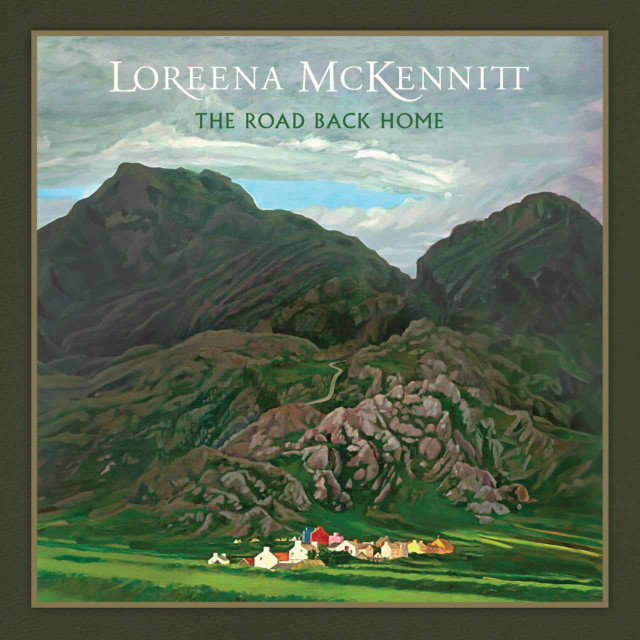
Loreena McKennitt-The Road Back Home
By Jonathan Napoli
Released March 8th, 2024 through Quinlan Road.
The album can be purchased: https://lnk.to/theroadbackhome
Loreena McKennitt’s The Road Back Home is a rich and reflective album that captures the spirit of her early days in the folk scene while offering a fresh yet timeless listening experience. Recorded live during the summer of 2023 at four folk festivals across Ontario, Canada, the album is a celebration of McKennitt’s Celtic roots, performed alongside a small ensemble of seasoned musicians including The Bookends and longtime collaborator and cellist Caroline Lavelle. Though recorded live, the album has an intimacy and clarity that makes it feel studio-polished while retaining the warmth and spontaneity of a shared musical moment.
According to McKennitt’s website, The Road Back Home is “a homage to simpler times” and indeed feels like a sonic return to places both geographical and emotional. There’s a strong undercurrent of homecoming—not just as a destination, but as a state of mind. This is music that invites you to exhale, to listen, and to remember.
A Journey of Sound and Spirit
Spanning ten tracks—seven vocal pieces and three instrumentals—the album blends Irish and English folk traditions with McKennitt’s ethereal vocal stylings and meticulous arrangements. The result is a journey that feels both ancient and alive, a soundscape that evokes lush green hills, old stone paths, and the enduring power of tradition.
Despite being drawn from traditional folk material, the album never feels dusty or outdated. Rather, it’s imbued with McKennitt’s signature clarity and finesse. The arrangements are neither overproduced nor too sparse; instead, each song is carefully balanced to let the melodies breathe while allowing room for expressive flourishes from the musicians.
From the very first notes, it’s clear that The Road Back Home is less about spectacle and more about atmosphere. This is not an album that demands attention with bombast. Instead, it earns it through subtlety, grace, and the sincerity of its performances.
Track-by-Track Impressions
1. Searching for Lambs
The album opens gently with “Searching for Lambs,” a traditional English folk song that sets the tone for what follows. The song begins with the plaintive wheeze of an accordion, soon joined by McKennitt’s luminous vocals. Her voice—clear, tender, and measured—carries the melody with a kind of reverent restraint. A cello soon enters, adding emotional depth and a sense of yearning. The interplay between McKennitt’s vocals and the instrumental passages gives the piece a dreamlike quality, as if the listener is being invited into a distant memory. As a first track, it functions beautifully welcoming, reflective, and immersive.
2. Mary and the Soldier
Next comes “Mary and the Soldier,” a beloved Irish ballad that tells the story of a woman who follows her love to war. McKennitt’s interpretation is faithful but refreshed by a bright harp introduction, which feels like sunlight filtering through leaves. The violin and tin whistle gradually enter, building layers of texture without overwhelming the vocal line. McKennitt sings with a gentle resolve, embodying the song’s emotional core: loyalty, bravery, and devotion. It’s a slow-burn track, quietly catchy and emotionally rich.
3. On a Bright May Morning
Originally featured on her 2010 album The Wind That Shakes the Barley, “On a Bright May Morning” appears here in a more intimate, acoustic setting. The stripped-back arrangement—featuring acoustic guitar, violin, cello, and tin whistle—highlights the song’s lyrical imagery and McKennitt’s elegant phrasing. The pastoral beauty of the track conjures an early spring morning, filled with both hope and melancholy. The emotional nuance here is subtle but palpable; McKennitt’s voice captures the fleeting, bittersweet beauty of the moment.
4. As I Roved Out
A standout track, “As I Roved Out” injects welcome energy into the album’s flow. More upbeat and rhythmic than the previous ballads, this traditional English folk song is lively without being brash. The guitar and tin whistle lead the way, supported by a gentle percussive drive. McKennitt sounds like she’s having genuine fun here—her voice dances nimbly through the verses. The arrangement is crisp, the tempo just right, and the result is infectious. This track is a turning point in the album, adding contrast and momentum while still staying rooted in tradition.
5. Custom Gap Medley
The first instrumental track, “Custom Gap Medley,” offers a spirited interlude. Beginning with a sprightly fiddle melody accompanied by acoustic guitar, the piece gradually builds into a layered tapestry of sound. Each instrument gets its moment in the spotlight, weaving in and out with seamless grace. The medley showcases the technical prowess of McKennitt’s bandmates while reinforcing the communal joy at the heart of Celtic music. Though wordless, it speaks volumes.
6. Bonny Portmore
A return to balladry, “Bonny Portmore” is one of the album’s more mournful selections. The song laments the loss of ancient Irish oak forests and, by extension, a vanishing way of life. McKennitt’s voice is particularly moving here—restrained yet aching with emotion. The arrangement is minimal: just acoustic guitar, soft tin whistle, and cello. The atmosphere is both elegiac and haunting. It’s a poignant moment on the album, reminding us of the fragility of nature and memory alike.
7. Greystones
Another instrumental, “Greystones” is gentler in tempo than the previous medley but no less evocative. Led by the tin whistle and supported by soft strings and guitar, the tune conjures images of rolling hills and coastal breezes. There’s a cinematic quality to the melody, as if it’s narrating a quiet return to a beloved place. It also functions as a breather—an introspective pause before the final stretch of the album.
8. The Star of County Down
If “Bonny Portmore” is the album’s most mournful track, “The Star of County Down” is its most joyful. This traditional song has been recorded countless times, but McKennitt’s version stands out for its energy and charm. The tin whistle and fiddle bring a tavern-like atmosphere to the recording, while the rhythmic guitar anchors the piece with steady propulsion. McKennitt’s vocals are light and playful here, embodying the flirtatious spirit of the song’s lyrics. It’s easy to picture this being sung around a fire or in a village square—a communal celebration of melody and mirth.
9. Salvation Contradiction Medley
The third and final instrumental, “Salvation Contradiction Medley,” is arguably the most dynamic of the three. It begins mid-tempo with a blend of banjo, accordion, tin whistle, and guitar, creating an intricate mosaic of interwoven melodies. Just when you think the tune has settled, it transitions into a fast-paced reel driven by drums, fiddle, and a racing tin whistle line. The tempo shift is exhilarating and reinvigorates the listener for the album’s closing number. It’s a rousing celebration of folk tradition in all its joyful complexity.
10. Wild Mountain Thyme
The album closes with the beloved Celtic song “Wild Mountain Thyme.” Here, McKennitt is joined by a male vocalist whose baritone blends beautifully with her voice, creating a rich harmonic texture. Their voices weave together with tenderness and restraint, never overpowering the delicate arrangement of guitar, strings, and whistle. As the last notes fade, there’s a lingering sense of peace and fulfillment. It’s a perfect closing track—emotional without being sentimental, grounded in tradition yet timeless in appeal.
Themes and Tone
What makes The Road Back Home especially compelling is its emotional honesty. There’s no artifice here, no attempt to modernize these songs for mass appeal. Instead, McKennitt leans into the traditional, trusting the music’s inherent beauty to carry it forward. The themes of love, longing, loss, and belonging recur throughout the album, drawing a subtle narrative arc that mirrors the title’s suggestion of returning—not just to a physical place, but to emotional origins.
McKennitt has always been adept at fusing the scholarly with the heartfelt, and that balance is on full display here. There’s a quiet intelligence to the way she interprets these songs—nothing is over-sung or overplayed. Her respect for the material shines through, as does her deep connection to the Celtic tradition.
Sound Quality and Production
One of the most impressive aspects of this live album is its sound quality. If not for the occasional applause at the beginning or end of tracks, a casual listener might not even realize these performances were recorded at live festivals. The clarity of the vocals and instruments is remarkable. The mix is warm and well-balanced, allowing every instrument to be heard distinctly. The production captures the ambiance of a live performance without the distractions that often accompany them. It feels both intimate and expansive—like being part of an attentive audience under a twilight sky.
Final Thoughts
The Road Back Home is, in many ways, a musical circle completed. For longtime fans of Loreena McKennitt, it’s a welcome return to the acoustic, Celtic-tinged roots that first brought her international acclaim. For newcomers, it’s an ideal introduction to her artistry—an entry point into a world.
Like what we do? Buy us a Cup of Coffee!